
Rendering · Gordon
Rendering and render repairs in Gordon
We cement render brick walls, fences and piers in Gordon, patch cracked and drummy render, and take failed render off where the brick or stone beneath can be left exposed.
Parts of Gordon sit in heritage conservation areas, so Ku-ring-gai Council’s approval route for rendering is in the heritage checks below.
Typical price$40–$80 per m² for cement render, GST included. What it covers
NSW licenceContractor licence 146681C, Wet Plasterer class. Check it on Verify NSW
- 15+ years in tuckpointing
- Free inspection and quote
- No minimum job size
The work
What we render.
Render needs attention when it has cracked, bulged or lifted at the edges, sounds hollow in patches, or shows damp after rain. For new render, the brick behind it has to be sound, so we check the wall before quoting.
Recognise your wall? Send us a photoCement rendering
Brick walls, front fences and piers prepared, keyed and cement rendered, finished ready for the paint or coating that goes over it.
Acrylic render
Cement-based render with acrylic added, which helps it grip the brick and flex a little, applied in coats and finished smooth or textured, ready for paint.
Whole-house rendering
Every outside wall of a brick house rendered, or old render that has failed across the house taken off and done again, worked wall by wall around windows, sills and corners.
Render repairs
Cracked and drummy areas on older homes and fences cut back to sound edges and patched to the profile and texture of the render around them.
Render removal
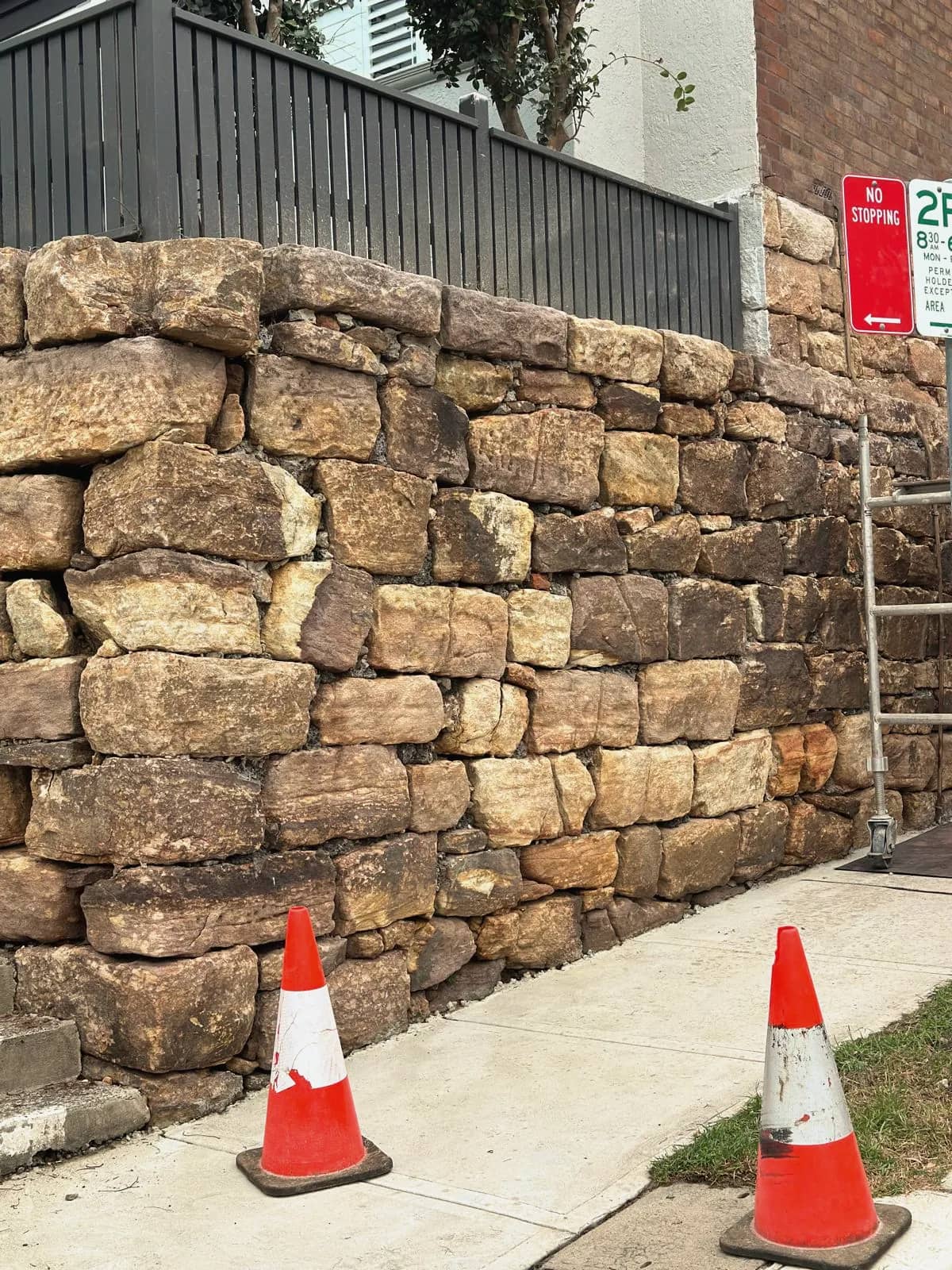
Failed render taken off where the brick or sandstone underneath can be repaired, cleaned and repointed as exposed masonry.
Heads & sills
Rendered window heads and sills formed or made good after brick or lintel repairs, with the edges and profile part of the finish.
Our work
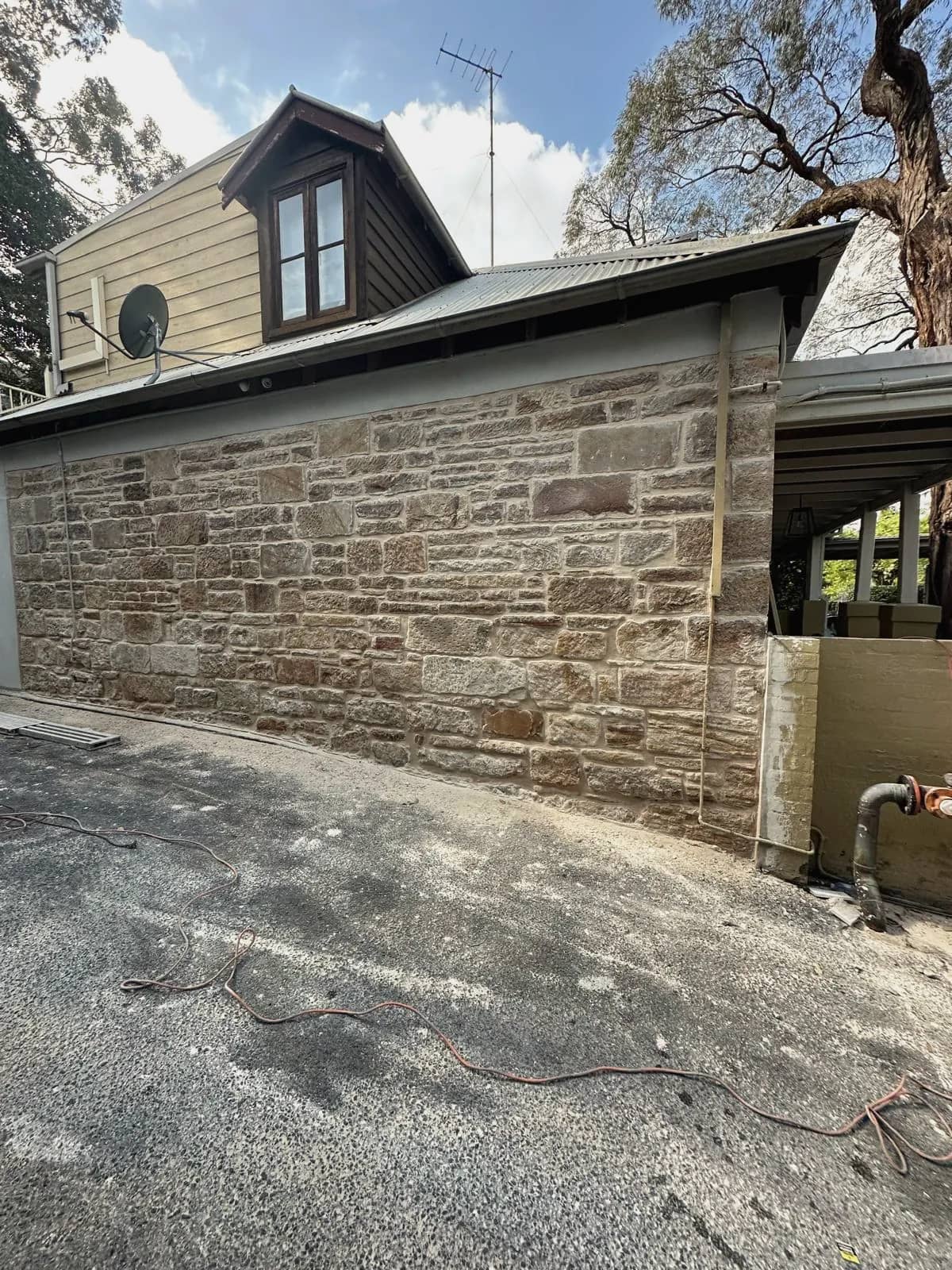
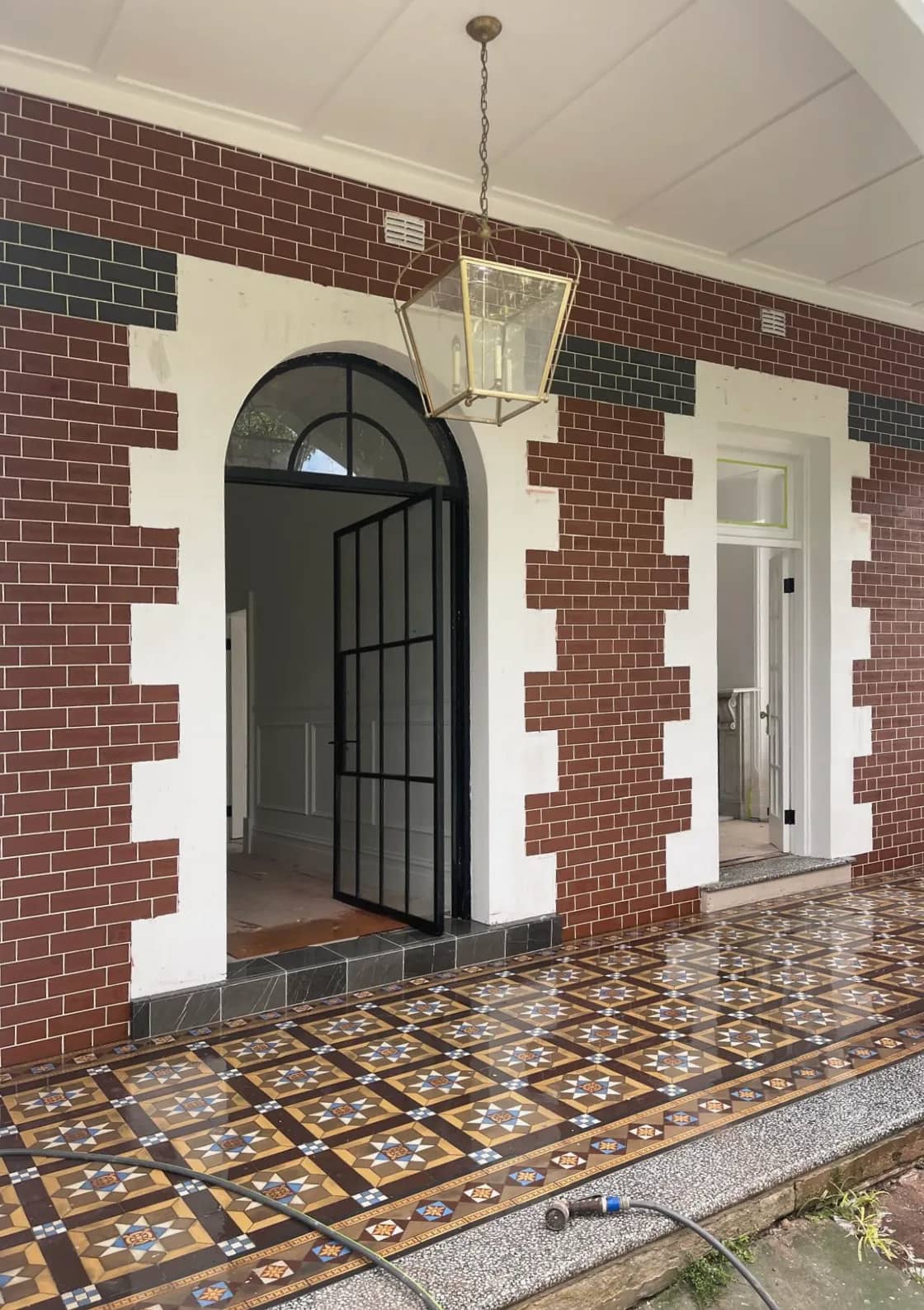
Our nearest job that included rendering
Photographed on one of our own jobs.
Our work in Balmain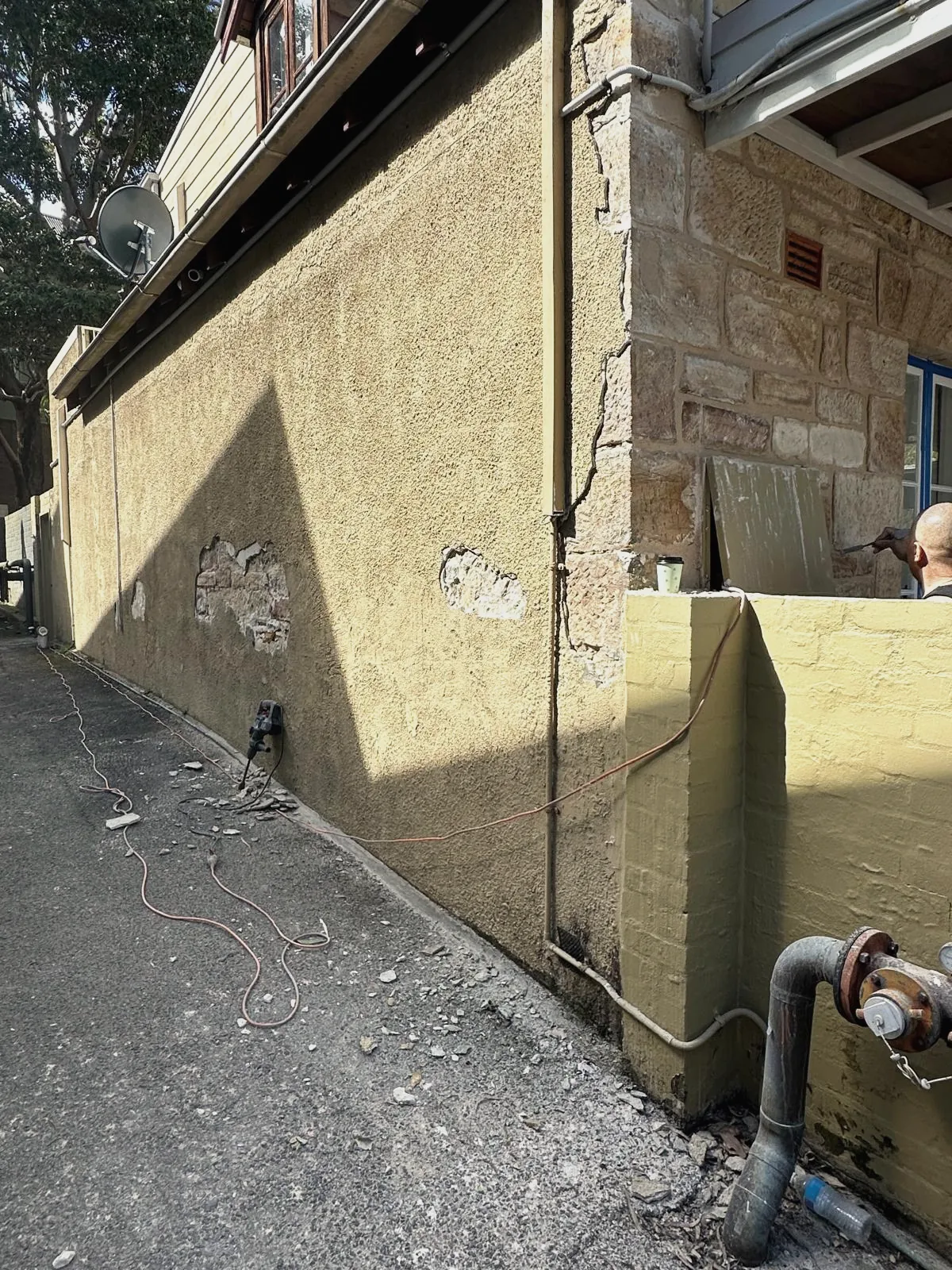 Before
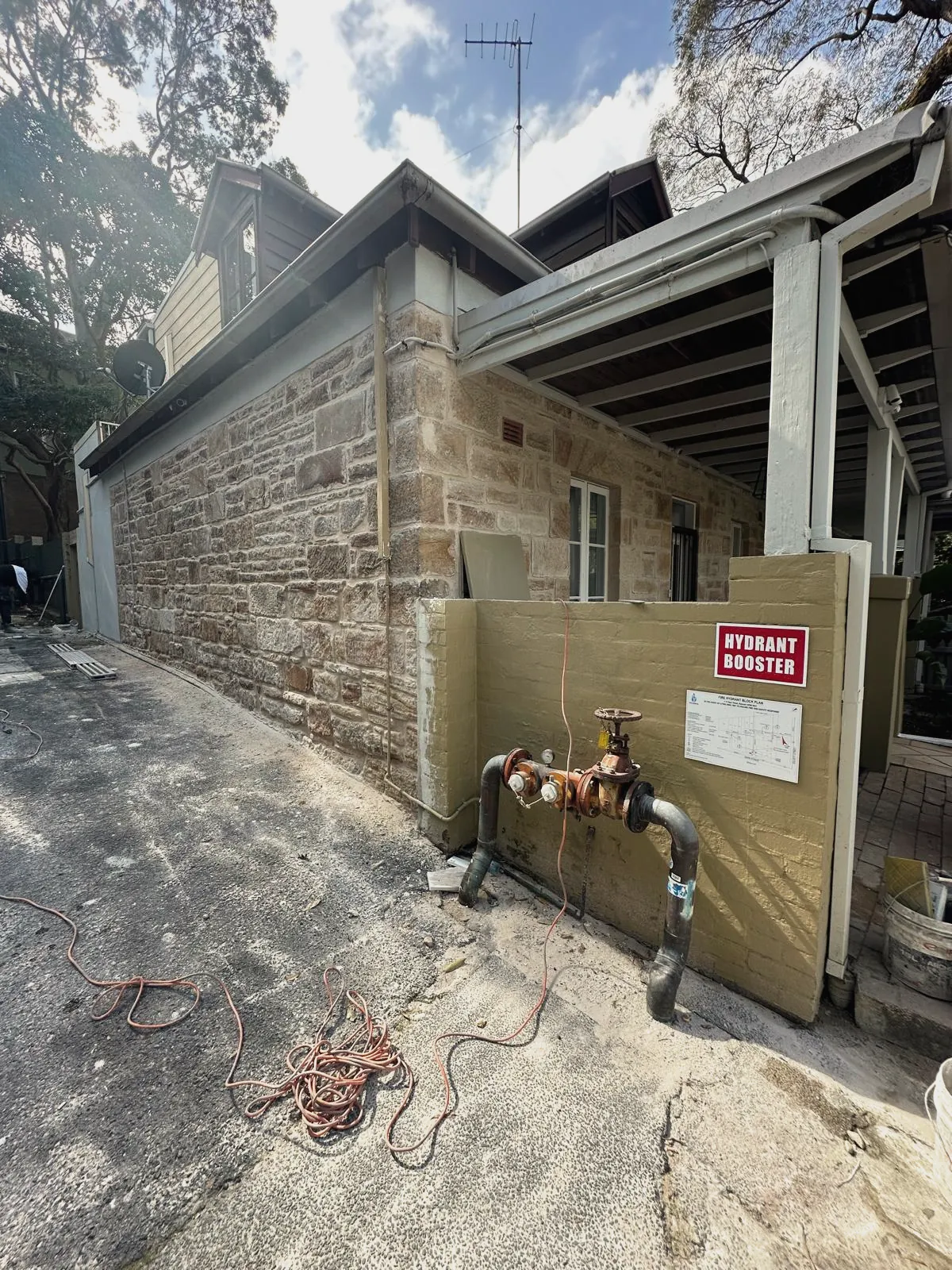 After
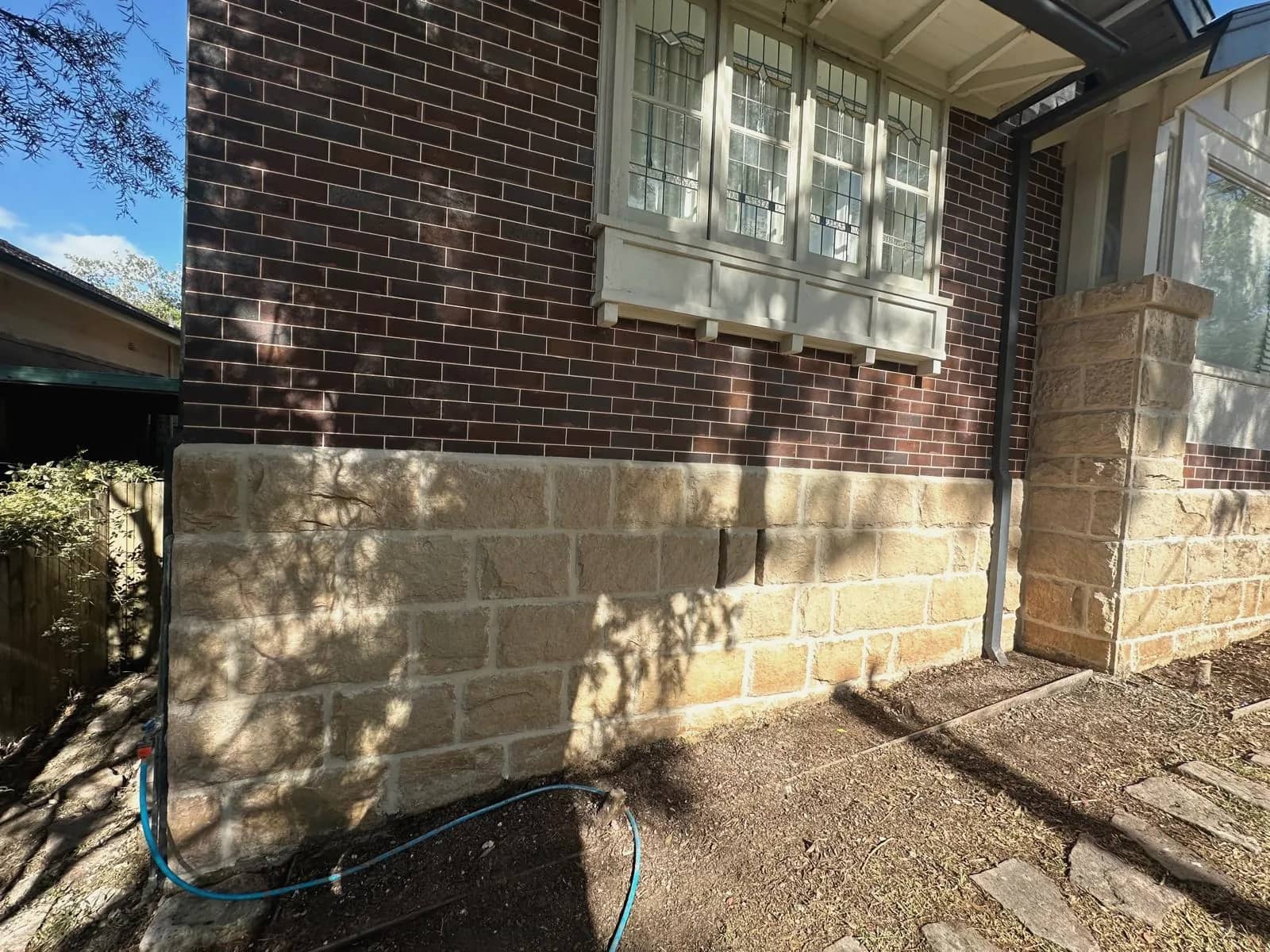
Our other jobs closest to Gordon
How much does rendering cost in Sydney?
Cement rendering a brick wall typically costs $40–$80 per m² and acrylic render $45–$80 per m², GST included, and patching a cracked or drummy area is typically $300–$900 for the job. The area, the height and access, how much preparation the wall needs and the finish all move the price. Painting is usually separate. Every job is quoted after a free inspection, with no minimum job size.
Cement render or acrylic render: which is better?
Neither suits every wall. Traditional cement render is sand and cement, often with lime, mixed on site and applied in coats. Acrylic render is also cement-based, with acrylic added to the mix, which helps it grip and flex a little and suits a finer or textured finish. Both need sound brick underneath and a paint or coating over the top. We recommend one once we have seen the wall, its age and the finish you want.
How much does it cost to render a whole house?
Rendering or re-rendering a typical single-storey brick house is typically $9,000–$21,000 for the job, GST included. Two storeys need scaffolding and cost more. Old render that has to come off first, and any brick, lintel or damp repairs found underneath, add to the work. Painting is usually separate. We quote after a free inspection of the whole house.
Can you render over an old brick house?
Usually, once the brick is sound and clean. Loose or crumbling bricks, failed joints and damp are fixed first, and painted brick needs preparing so the render holds. On a heritage home or in a conservation area, check with the council first: rendering face brick that has never been rendered changes how the house looks and may not be allowed.
How do you repair cracks in render?
A fine surface crack can be cut out and filled. Where the render has gone drummy or the crack runs through to the wall, the loose render comes off back to sound edges and the area is rendered again to match. If the same crack keeps coming back, the wall may be moving or damp, and that cause needs attention before the patch will last.
Is removing the render better than patching it?
Not necessarily. Sound render can be worth keeping, particularly where it is part of an older home’s original finish. Removal depends on its condition, the masonry beneath and the finish you want. Concealed brick or stone may need further repair, cleaning and repointing, and may not be suitable to leave exposed.
Is rendering licensed work in NSW?
Rendering is wet plastering, whether the render is cement or cement-based acrylic. In NSW, residential building work over $5,000 needs a contractor licence with the right class. Our work is done under NSW contractor licence 146681C, Wet Plasterer class, and you can check it on the NSW Government’s Verify NSW licence register.
Before work starts
Heritage checks before rendering
Rendering face brick that has never been rendered changes how a house looks from the street, and on a heritage item or in a conservation area the council may not allow it. Repairs match the render already there. Check the address with the council before face brick is rendered or old render is taken off.
How to check heritage requirementsCheck if your street is in a conservation area
Gordon has heritage conservation areas, listed below with the plan that maps them. If your home is in one, check the council’s heritage requirements before work on its walls starts.
Listed in the plan
- Love Estate, Thorne Grant Conservation Area
- Roberts Grant Conservation Area
- St Johns Avenue Conservation Area
- Gordon Park Estate, McIntosh and Ansell Conservation Area
- Smith Grant Conservation Area
- Robert Street/Khartoum Avenue Conservation Area
- Gordondale Estate Conservation Area
- Yarabah Avenue Conservation Area
- Gordon Park Conservation Area
SourceKu-ring-gai Local Environmental Plan 2015: heritage schedule and map (opens in a new tab)
Check if your home is a heritage item
Some homes in Gordon are listed heritage items on the council’s heritage map. If yours is one, the work goes through the council’s heritage process, inside a conservation area or not, so check your address on the map before work starts.
SourceNSW Planning Portal, LEP heritage map layer (opens in a new tab)
Ku-ring-gai Council: the approval route
Owners of heritage items and buildings in heritage conservation areas can lodge a minor heritage works application for work of a minor nature or maintenance, provided it doesn’t adversely affect heritage significance; a development application is needed where consent is required. Separate online forms cover conservation areas and heritage items.
SourceMinor Works application (Conservation Area / Heritage Item) (opens in a new tab)
Sources checked October 2026.
Nearby
Rendering in nearby suburbs
The nearest suburbs we cover for this work.
Rendering across the North ShoreNo minimum job size
Free inspection and quote in Gordon.
Tell us what needs attention and where the work is. Photos are optional.
0402 133 821Monday to Friday, 7am to 5pm · Saturday, 9am to 3pm · Sunday closedastutetp@gmail.comSending photos? Take photographs from a safe position; do not pull at loose render or climb to reach it.