Understanding damage
Crumbling bricks or mortar: what needs repairing?
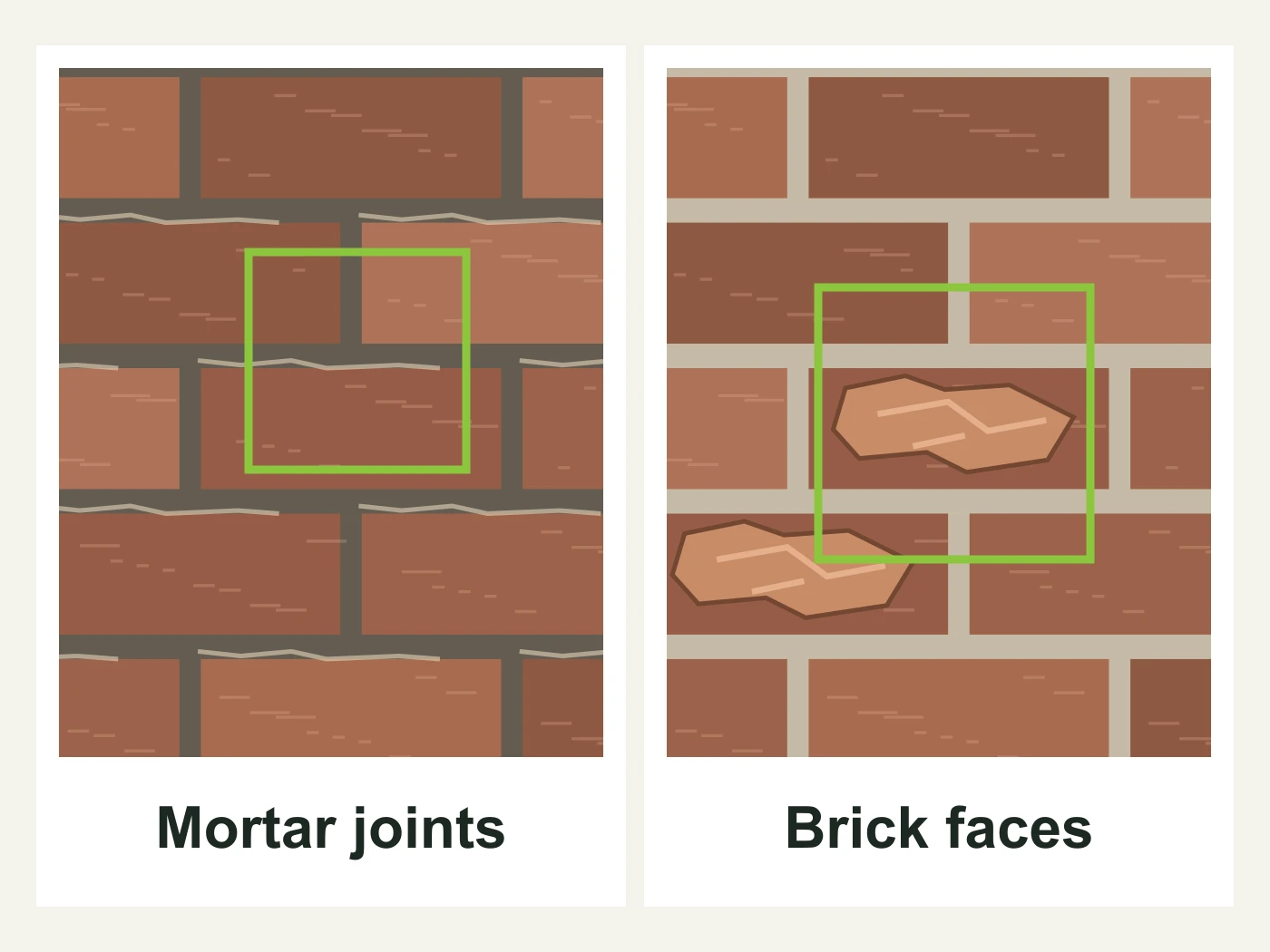
If the gaps are between the bricks, it’s the mortar, and repointing renews it. If the brick itself is flaking or powdering, new mortar won’t bring the face back; those bricks need repairing or replacing. Some walls need both, plus a look at what’s causing the damage.
Start with where the damage is
Look at the wall as a whole, then at the damaged area from a safe position. Mortar is the material between the bricks. The brick face is the outer surface of the brick itself.
Material missing from the joints
Gaps, loose grains and unevenly eroded mortar are signs of deterioration. Repointing removes unsuitable or failed mortar and renews the joints with a compatible mix.
A recessed joint isn’t necessarily defective: some finishes are set back on purpose. Its condition and the original profile matter.
The face of the brick is breaking away
Flaking, powdering or pieces coming away from the brick itself are called fretting or spalling. Filling the surrounding joints does not restore the lost brick face.
The depth and extent of the damage help determine whether individual bricks or a larger section need attention.
Fine white lines disappearing from otherwise sound brickwork may instead be deterioration of a tuckpointed finish. Our tuckpointing and repointing comparison explains that distinction. The opening picture separates these surfaces so you can describe where the damage is; there is no need to scrape the wall to identify it.
Why the cause matters
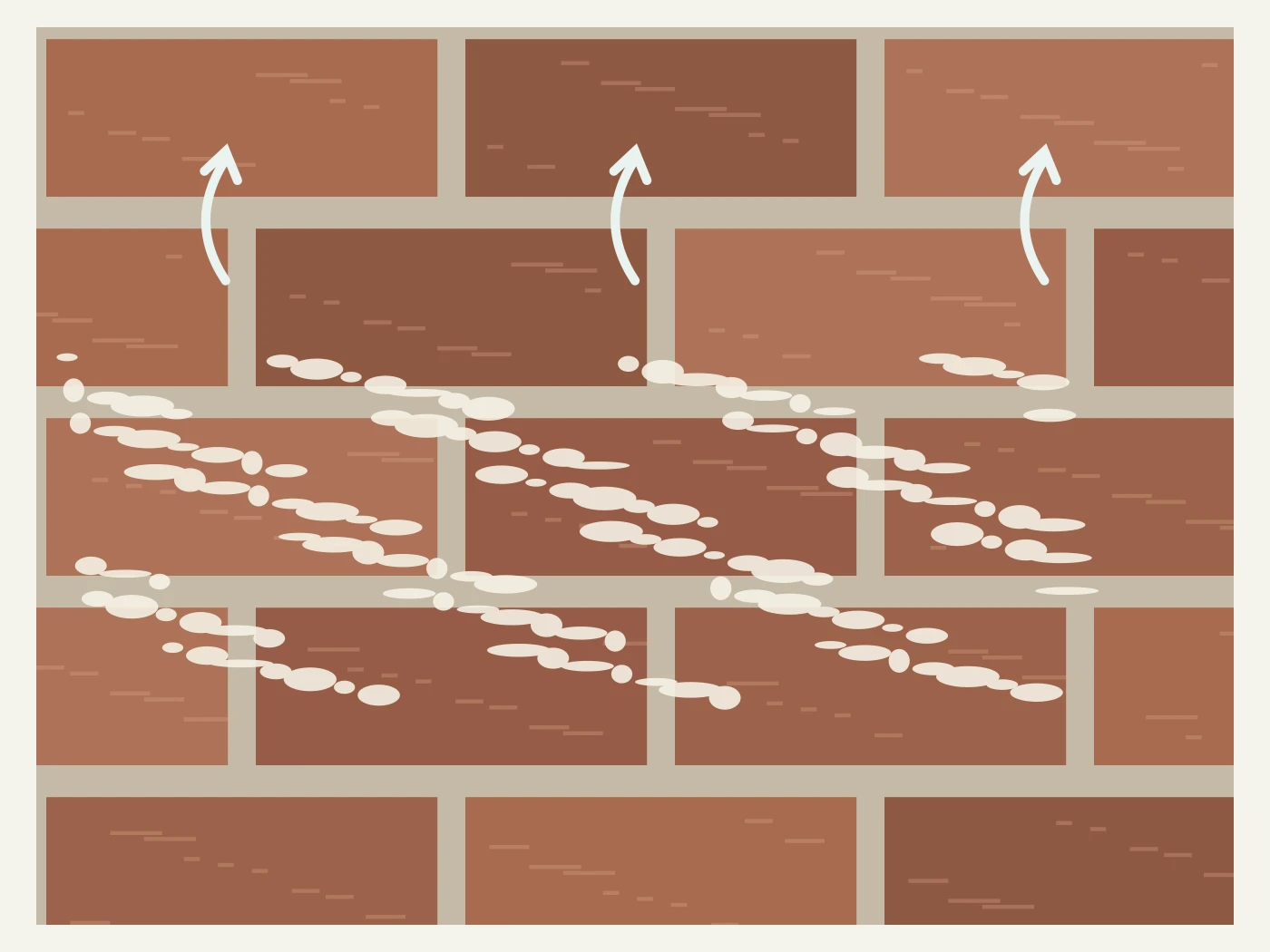
Moisture, salts, exposure and incompatible previous repairs can contribute to deterioration. They do not leave a single pattern that reliably identifies the cause from a photograph.
On older walls, a hard, dense repair can be incompatible with softer masonry. The new mortar needs to work with the existing bricks and joints, including how the wall takes up and releases moisture. A good colour match does not establish material compatibility.
If white powder keeps returning, or damage is concentrated beside a leaking gutter or near the base of a wall, mention it when you book an inspection. Treating only the visible surface while moisture continues leaves part of the problem unresolved.
Repointing, brick repairs or both?
- Sound bricks with deteriorated joints
Repointing suits this. Sound original mortar doesn’t need removing just because another area has failed.
- Damaged bricks within an otherwise repairable wall
We replace the damaged bricks and repoint the joints around them in the same job.
- Cracks, displacement or loose masonry
The wall may need a different assessment and repair approach. A new joint finish alone does not address movement or failed support.
Sometimes a local repair is enough; the whole façade doesn’t always need treating. At the inspection we work out which areas need work, what can stay and how the repaired section will meet the existing finish.
Does every weathered brick need replacing?
No. An uneven surface or colour change is not the same as ongoing material loss. The decision depends on the brick’s condition, its role in the wall and whether deterioration is continuing. Ask which bricks actually need replacement and why, particularly where original materials can be retained.
Can fresh mortar simply be spread over the gaps?
When we repoint, we rake out the failed joints so the new mortar forms a sound repair. A thin surface cover can hide deeper loose material. A quote should describe the preparation as well as the finished appearance, without assuming every joint needs the same treatment.
If bricks are loose or the wall is visibly bulging or moving, keep clear and seek prompt professional assessment. Do not scrape or remove material to test the wall yourself.
What to check before arranging the work
Tell us when you noticed the damage, whether it is spreading, any recurring damp and previous repairs or cleaning. A wide photograph and a closer view help start the conversation without disturbing the surface.
Ask which bricks and joints are included, what preparation is needed, how the mortar will be selected and whether a separate moisture or structural issue needs attention. Our quote-planning guide explains how these differences affect the scope.
We do both brick repointing and brick repairs, and we check the wall before recommending either, including whether the tuck lines need restoring afterwards.
Sources and further reading
Heritage Council Victoria: mortar materials and repointing older buildings; Heritage NSW: salt attack and rising damp (PDF).
Sources checked 28 October 2026.