Matching the finish
Can new bricks and mortar match an old wall?
Often close, not always invisible. Colour is only part of it: brick size, texture, the mix of tones across the wall, the mortar and the joint shape all show. Agree samples before the repair so you know how the new work will sit.
A match involves the whole wall
A replacement brick can be close in colour and still look different once laid. Its size, surface texture, edges and the surrounding joints influence how well it belongs. Older walls often contain several tones, so matching one brick in isolation can miss the overall pattern.
- Size and shape
- A different brick size changes the rhythm of the courses or the width of the joints. Colour alone cannot correct that.
- Texture and edges
- A smooth, sharply edged replacement can stand out beside weathered or irregular brickwork.
- Colour variation
- Look at the range across the wall, including lighter and darker bricks, rather than choosing from a single close-up.
- Mortar and profile
- The colour and shape of the joints change the contrast and shadows around every brick.
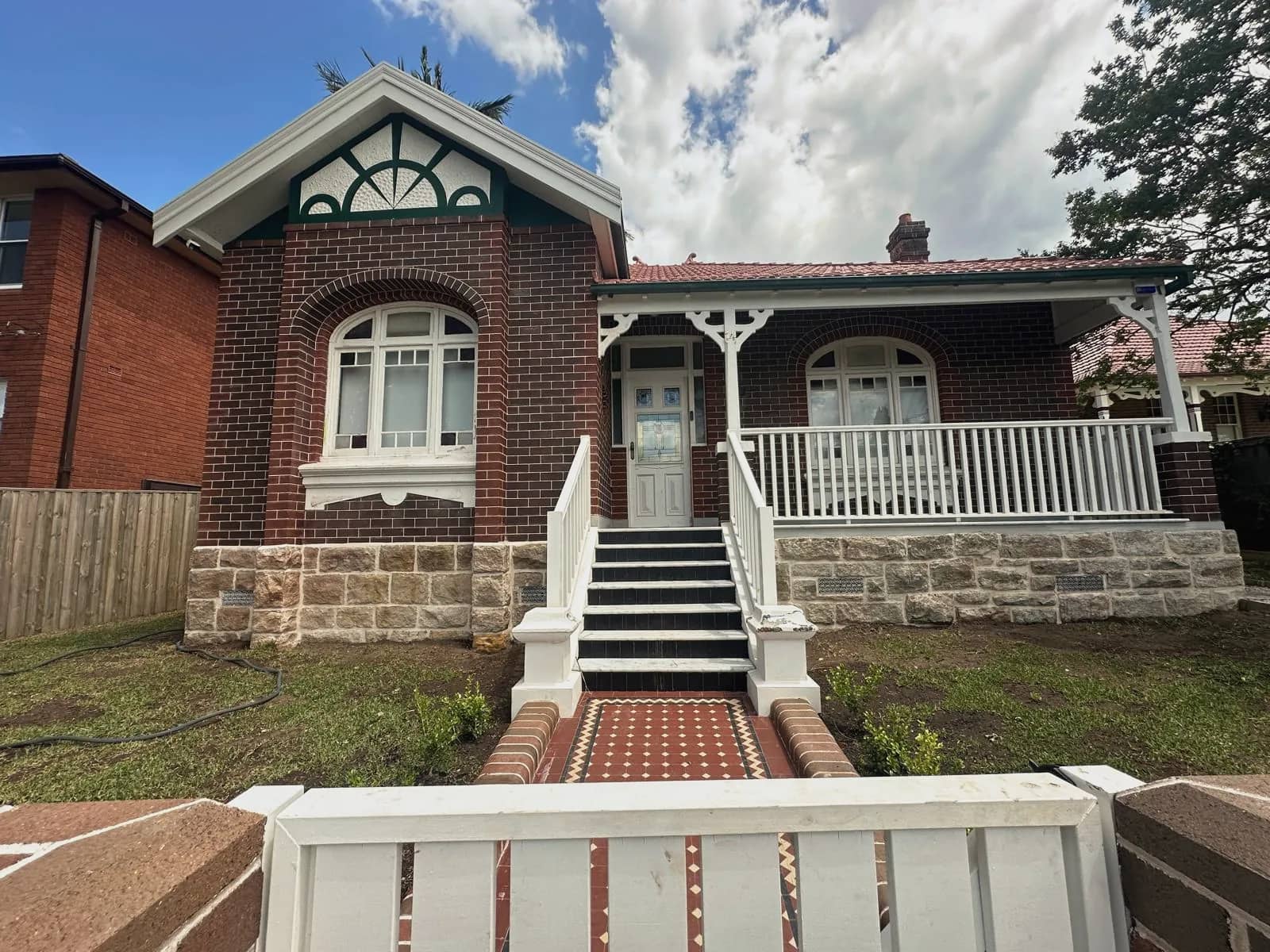
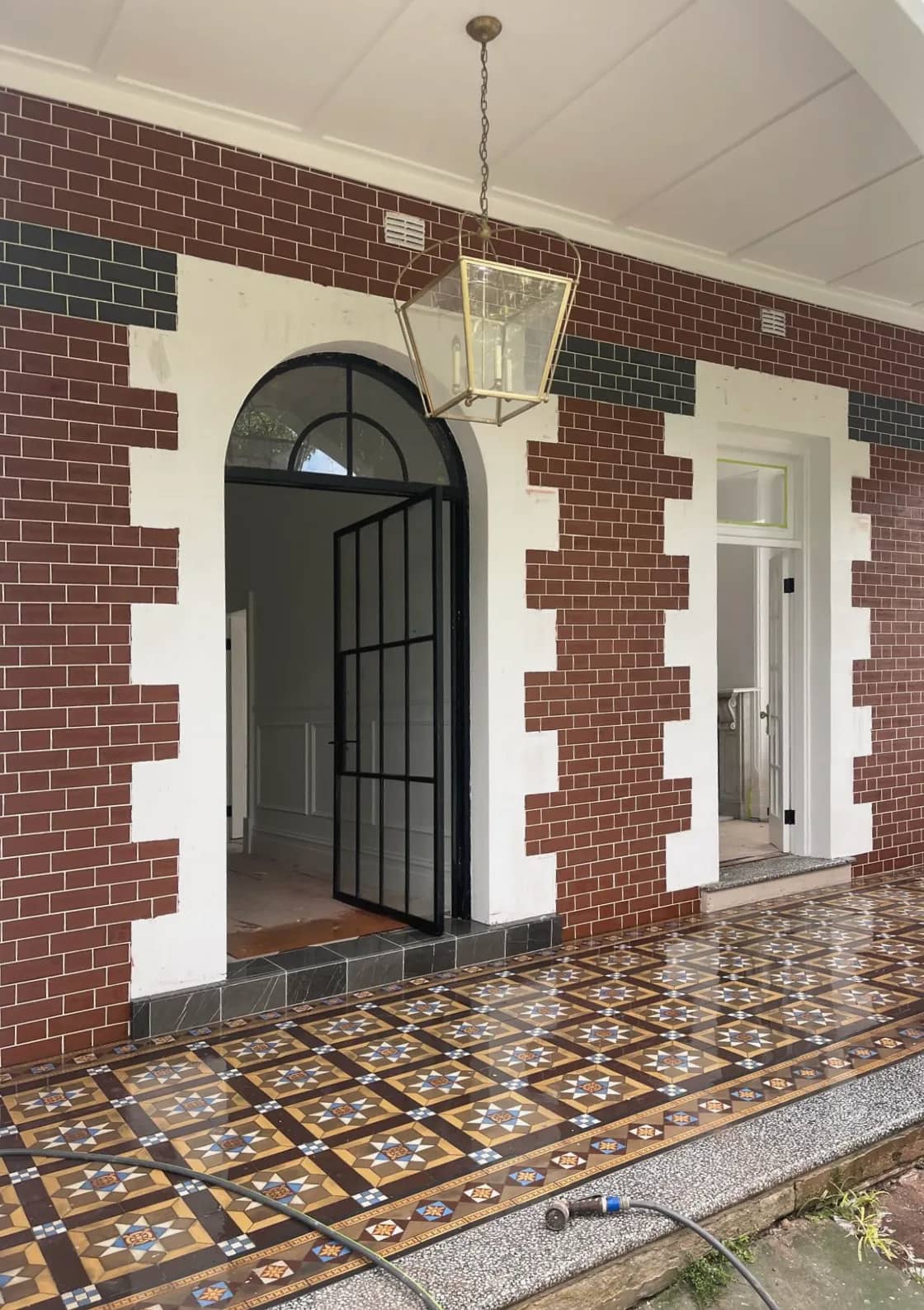
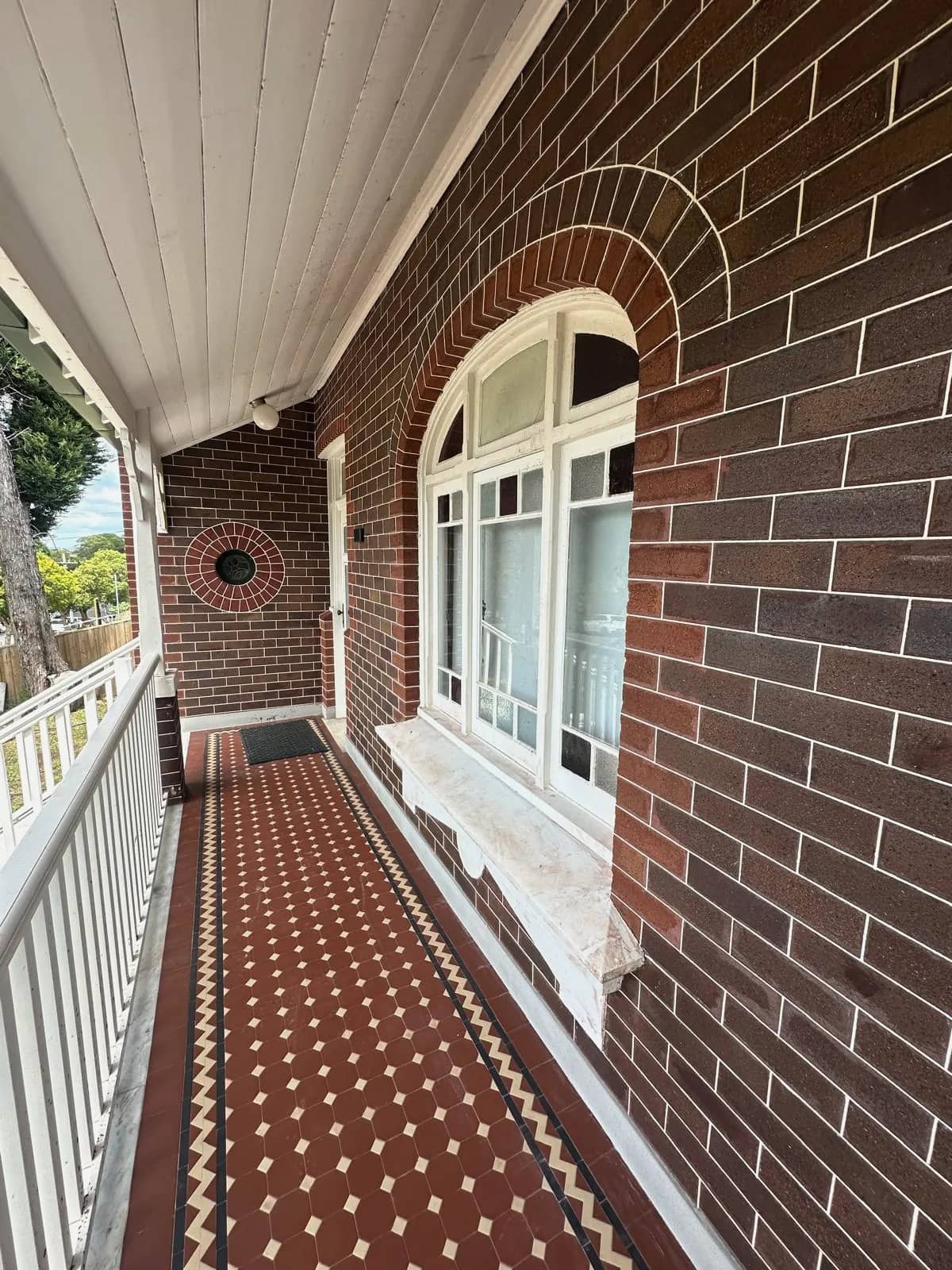
In the opening photograph of our Earlwood verandah, notice how the red-brown bricks, the fine white tuck lines and the brick arch over the window read as one pattern. The joints matter as much as the bricks to the overall look. This is a tuckpointing example, not a brick-replacement or staining result.
Why new mortar can stand out
Fresh, wet mortar is not a reliable guide to its finished appearance. A sample needs appropriate curing and drying before its colour is judged beside the existing wall. Compare it in daylight, both close up and from the usual viewing distance.
Colour is only one consideration. Sand, texture, the chosen mix and how the joint is finished all affect the result. A flush joint and a recessed or shaped joint can look different even with similar mortar.
For older masonry, the mix must also suit the existing materials. A harder repair is not necessarily a better one. When we repoint, we choose the mix for compatibility as well as colour and joint profile: see our repointing service.
With tuckpointed brickwork, the fine contrasting line is a separate part of the appearance. Restoring that line is different from simply using pale mortar throughout the joint. See how the two finishes differ.
Will new mortar eventually blend in by itself?
It changes as it cures and weathers, but waiting won’t correct the wrong mix, colour or joint shape. Agree a representative sample and any expected variation before the main work. Avoid judging a wet repair beside a dry wall, or relying on a phone screen to compare subtle colours.
What if the original brick is discontinued?
We look at available new bricks and, where suitable, reclaimed bricks. An older brick can look promising without being right for its new position: condition, dimensions and suitability for the exposure still matter. A visual match alone is not enough.
For a small repair, compare several candidate bricks beside the existing wall rather than relying on a product name. A larger area needs a considered blend so lighter and darker tones sit naturally across the work. If the closest suitable brick differs in colour, a separate staining sample shows the options.
Where colour blending can help
Brick staining is an option when suitable replacement bricks differ in tone or an existing area needs its colour adjusted. It changes appearance; it cannot change a brick’s size, surface texture or the shape of its joints.
A sample on the actual wall shows whether the surface accepts the treatment and whether the colour sits comfortably beside adjoining brickwork. Paint, sealers, staining from moisture or damaged brick faces can affect the options.
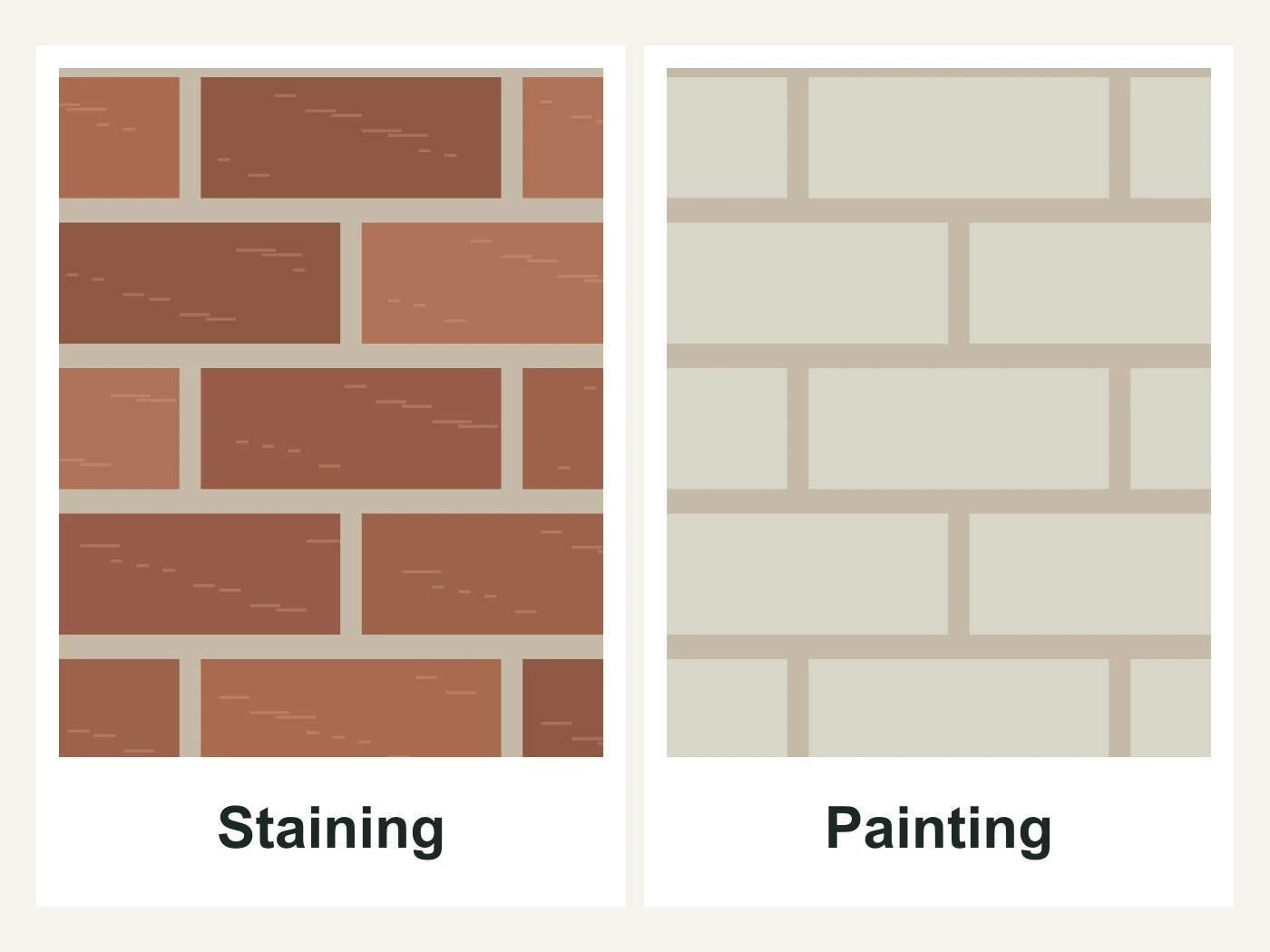
Our staining versus painting guide explains the different finishes. A colour treatment should not be used to disguise deterioration that first needs repair.
Agree the finish before the repair
- Look at the proposed brick beside the wall, including its size and surface.
- Discuss the mortar mix, colour and joint profile together.
- Judge mortar after suitable curing and drying; compare colour samples close up and from further back.
- Clarify the extent of the repair and how its edges will meet the surrounding work.
- Agree any limits to the match before work starts.
Weathering, discontinued bricks and natural variation can prevent an exact match. The aim is a considered repair that suits the wall, with realistic expectations about what will remain visible.
For a heritage property, check the relevant approval requirements before changing materials or finishes. We can look at brick repairs, joint restoration and suitable colour blending in the same inspection.
Sources and further reading
PGH Bricks: brick and mortar questions; Heritage Council Victoria: Mortars—materials, mixes and methods (PDF), including samples, curing and matching.
Sources checked 28 October 2026.