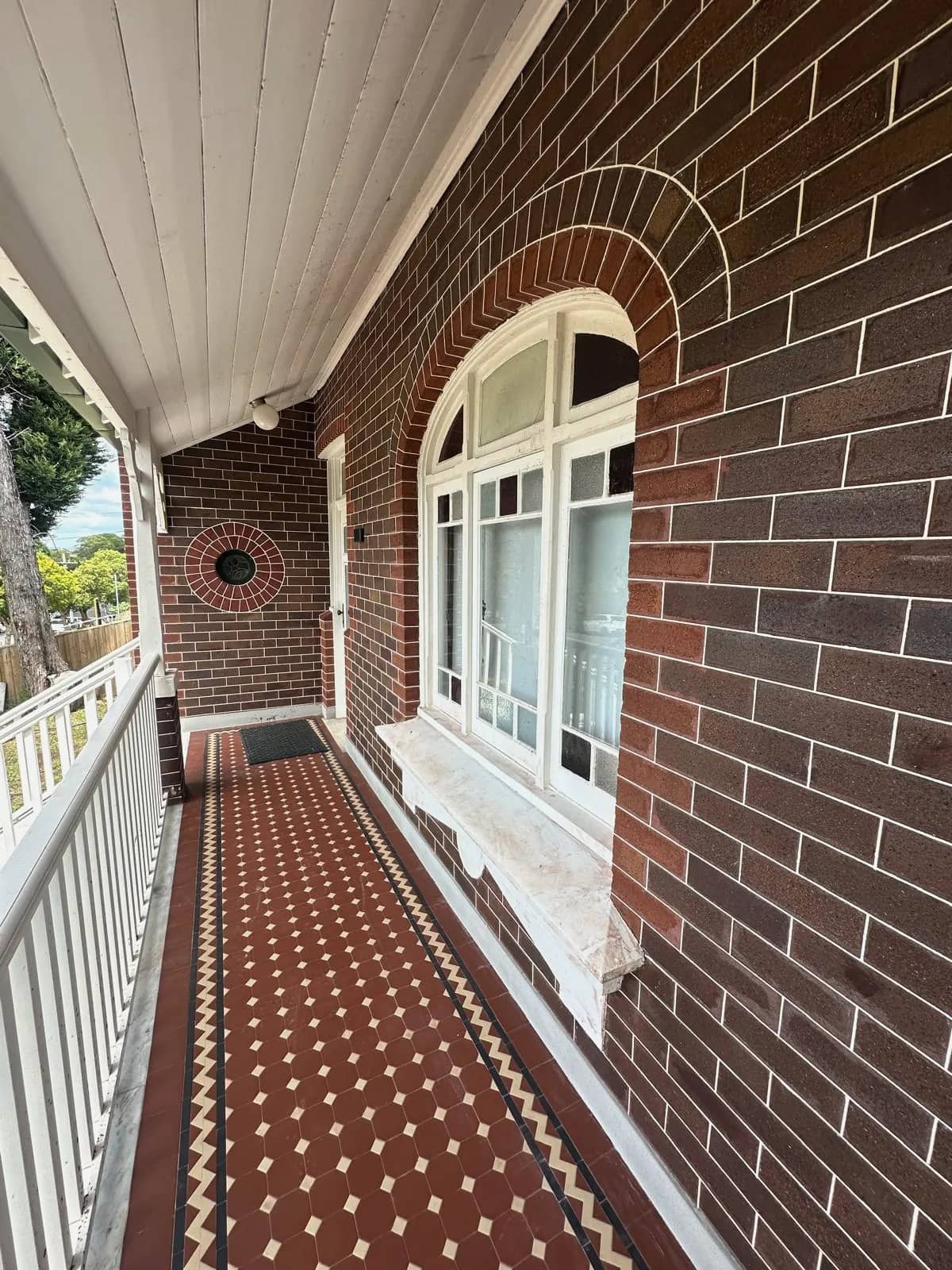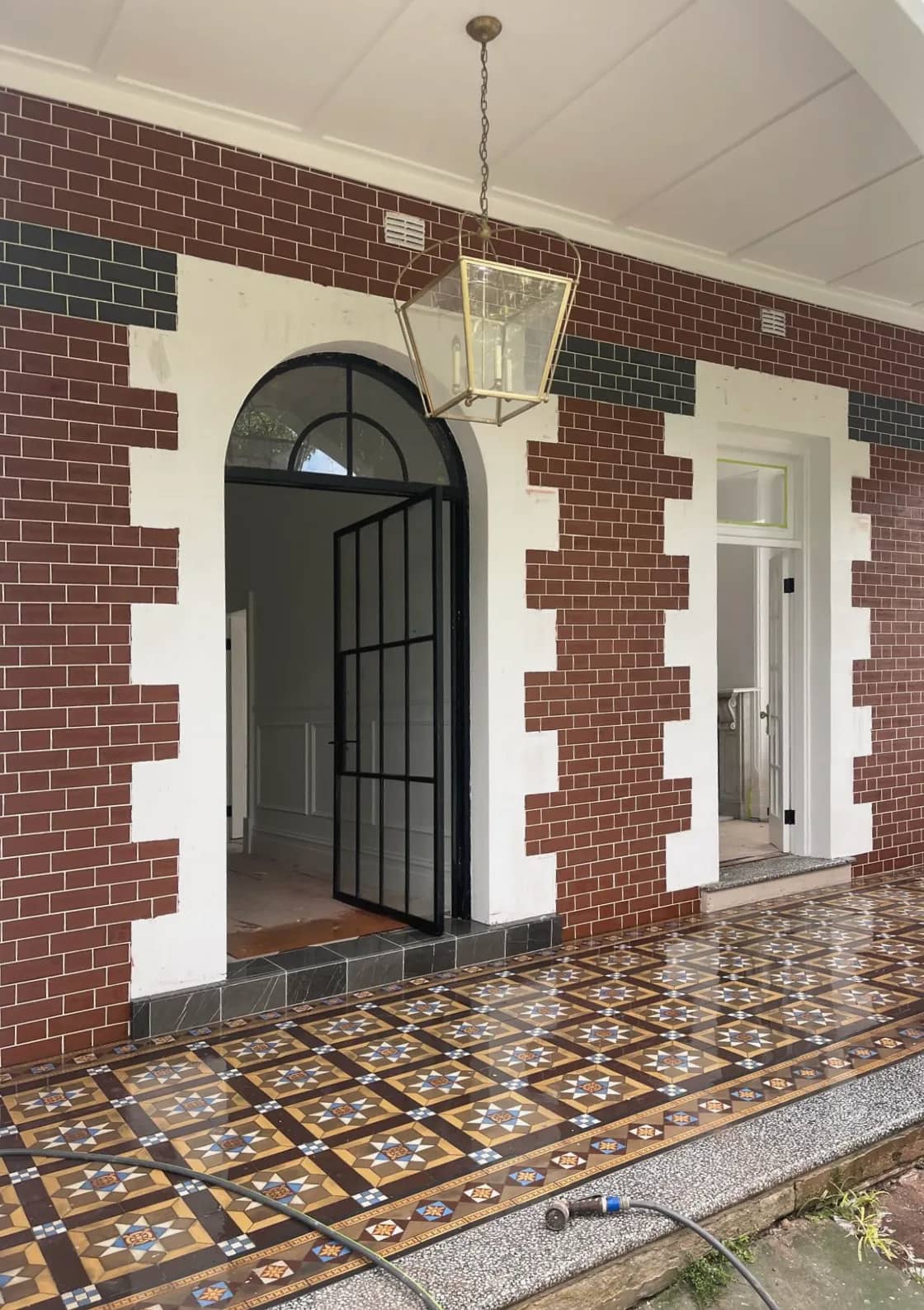
Colour and finishes
Brick staining vs painting: which suits your wall?
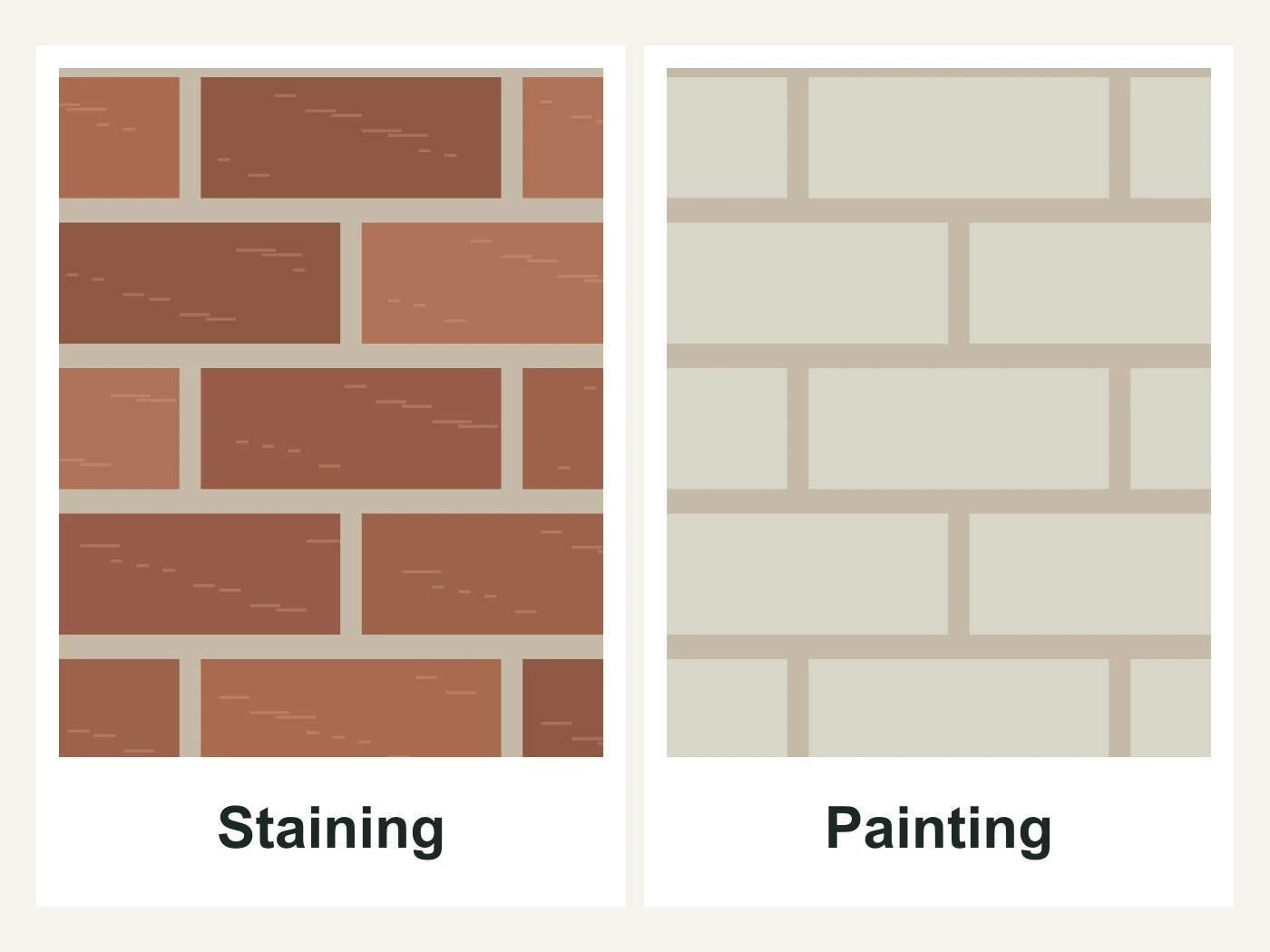
Stain soaks into the brick and changes its colour but keeps the texture and the variation between bricks. Paint sits on top as an even, covering coat. We do brick staining, not house painting, and a sample on your own wall shows the real result.
Two different finishes
Start with the appearance you want: individual bricks with their existing character, or a more uniform covering colour. Neither option repairs damaged masonry.
Brick staining
- Appearance
- Changes the brick’s colour while retaining texture. Individual tones can be blended.
- Typical purpose
- Colour adjustment or matching replacement bricks on a suitable, absorbent surface.
- Check first
- Existing coatings, uptake and the dry sample. Staining cannot change brick size or repair a damaged face.
Painting
- Appearance
- An opaque coating covers the original colour. Brick shapes and some texture can remain visible.
- Typical purpose
- A covering colour scheme, with a coating system appropriate for the wall.
- Check first
- Preparation, existing paint, moisture and ongoing coating maintenance.
The picture compares how the two finishes look. We do brick staining and colour matching; we don’t do house painting.
Can staining match or lighten bricks?
Staining can blend a small group of replacement bricks or adjust a larger area. An older wall often contains several colours; treating every brick identically can change that character.
A lighter or darker result depends on the starting colour and the treatment. A photograph, colour swatch or product name alone cannot show the achievable change. We check the surface and try a sample first.
A uniform pale finish and a subtle repair match are different goals. Show the intended result as well as the existing wall, so the sample tests the change you actually want.
Staining cannot correct the wrong brick size, change the joint profile or rebuild a damaged face. Our brick and mortar matching guide explains the other parts of a successful repair.
What if the wall is painted or sealed?
A penetrating treatment needs a suitable surface. Paint, sealers and other coatings can prevent it reaching the brick or cause uneven uptake.
So an already coated wall needs its own check. Do not assume that a coating can be removed safely or that the exposed bricks will look consistent afterwards. Tell us about previous treatments, including any cleaning chemicals, even if they were applied years ago.
Why the sample matters
A sample on the actual wall answers more than a colour chart. It shows how the chosen treatment interacts with the brick and how the finish sits beside the surrounding mortar.
- Judge the sample after it has dried, in daylight.
- Look close up and from the usual distance you see the wall.
- Check it beside neighbouring bricks, mortar and other materials.
- Agree how much natural variation should remain.
- Confirm the preparation, treatment area and finish before proceeding.
On our brick staining jobs, we check the wall’s condition and agree a sample with you before the main work. An exact colour match is not always achievable.
Think about condition and future care
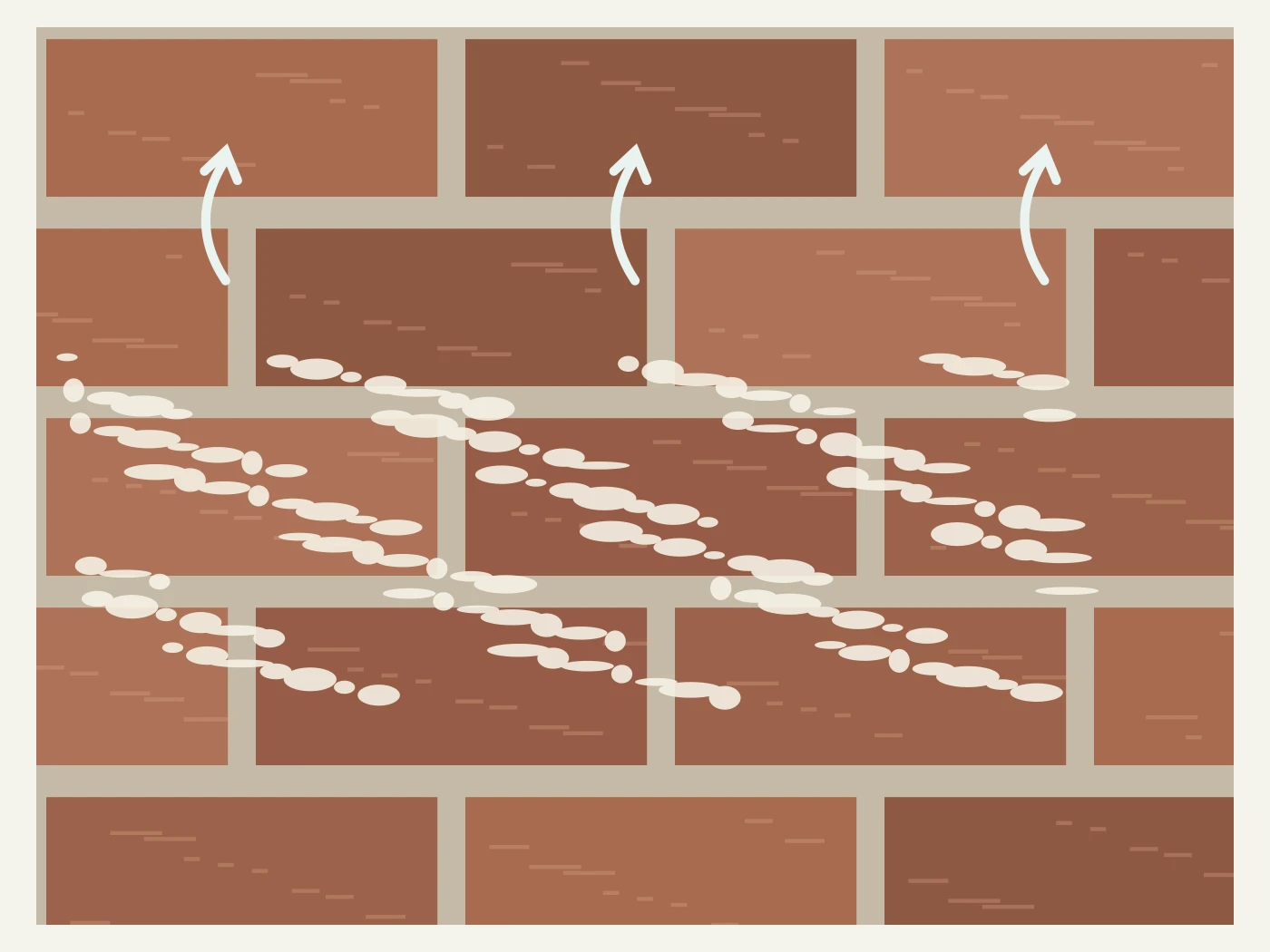
Cracked or crumbling bricks, failed joints and recurring moisture need attention before colour work. White deposits that keep returning should not simply be covered.
There is no useful universal lifespan for every stain or paint. Product, preparation, exposure and the wall’s condition affect performance. Ask for the maintenance guidance and any product-specific limitations for the proposed treatment.
Is staining always breathable or maintenance-free?
Those claims depend on the product and the surface beneath it. Ask how the proposed system handles moisture and how it should be cleaned or maintained. Applying colour does not remove the need to resolve recurring damp or salt deposits first.
Which option costs less?
Compare the same area and preparation. Blending individual bricks, stripping an earlier coating and treating an unobstructed wall are different scopes. A quote should identify preparation, the sample, the treatment area and the finish; neither the word “stain” nor “paint” tells you the whole cost.
If the aim is to remove marks rather than change the brick’s colour, brick cleaning may be the more relevant conversation.
Sources and further reading
Westox: brick stain technical data (PDF) describes a stain for porous masonry, including matching new bricks. It is one product example, not a specification for your wall. Dulux’s guidance on efflorescence explains why salts and moisture matter beneath a coating.
Sources checked 28 October 2026.