Repair options
When does crack stitching work—and when won’t it?
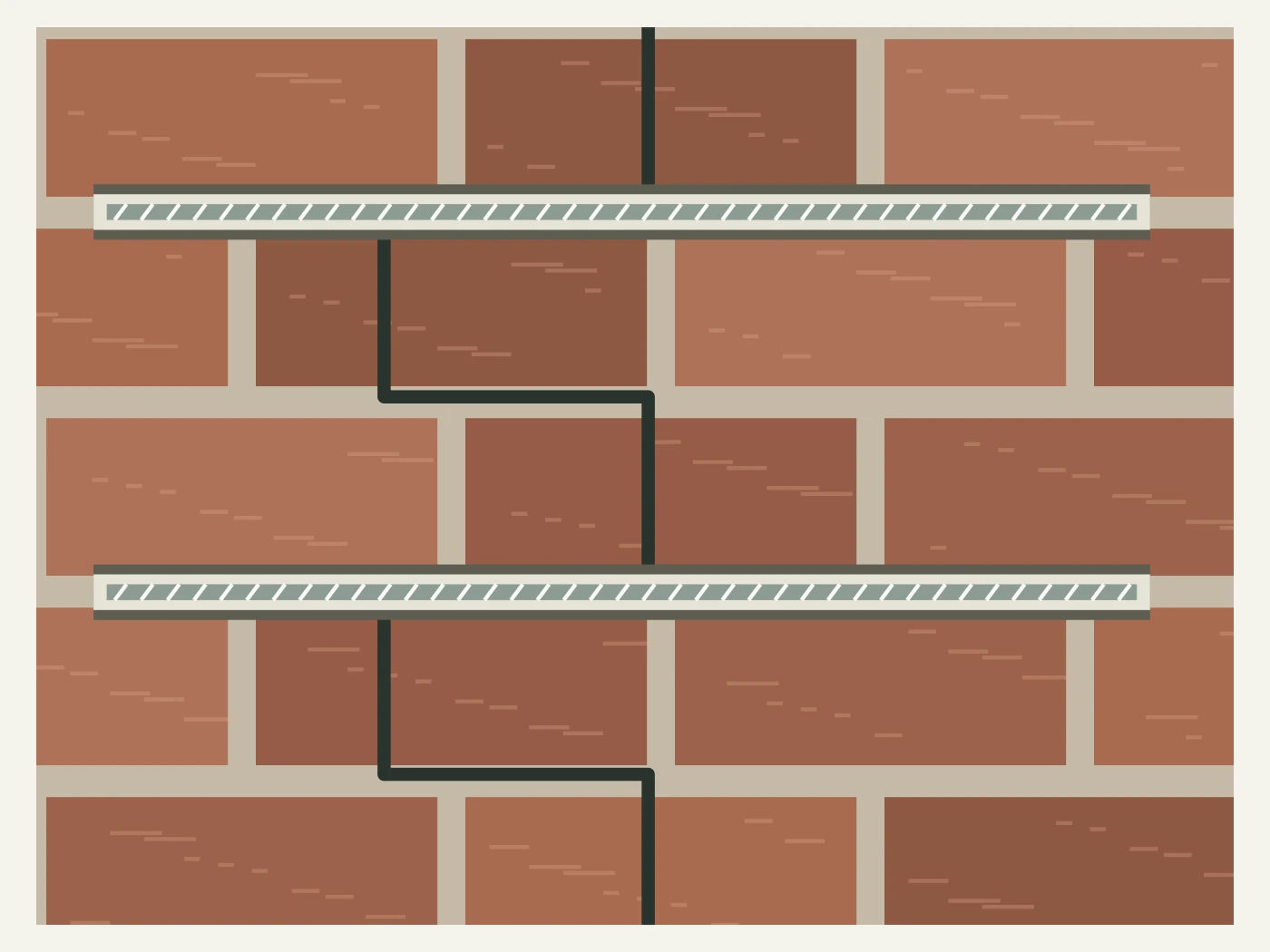
Crack stitching sets purpose-made bars into the mortar joints across a crack, bedded in grout, then repoints over them so the repair sits inside the joints. It suits brickwork that is sound either side of the crack, once the cause is known. It won’t fix a failed lintel or a wall that’s still moving.
What the reinforcement does
Crack stitching connects masonry across a crack using metal bars bonded into the wall. In a common arrangement, the reinforcement sits in horizontal mortar joints and is concealed when the joints are made good. The bars extend into suitable masonry on both sides of the crack so the repair can transfer forces across it.
That is different from filling a gap for appearance. The purpose is to reinforce suitable masonry across the crack, rather than simply cover the line.
The drawing shows the bars beneath the finish so the principle is visible. Their size, position, spacing and length must be selected for the wall and repair system; the drawing is not an installation plan.
When stitching may be appropriate
Stitching suits a cracked section that needs reinforcing, where the surrounding masonry can carry the repair. Suitability depends on the wall’s construction, the condition of the materials and the cause of the cracking.
Before we quote, we check whether the wall is still moving, whether a support has failed and whether an engineer should look at it first.
If the cause is uncertain or the wall’s structural adequacy is in question, a structural engineer may need to assess it before the repair is specified. An existing report is useful when discussing the work; a photograph is a starting point, not a repair design.
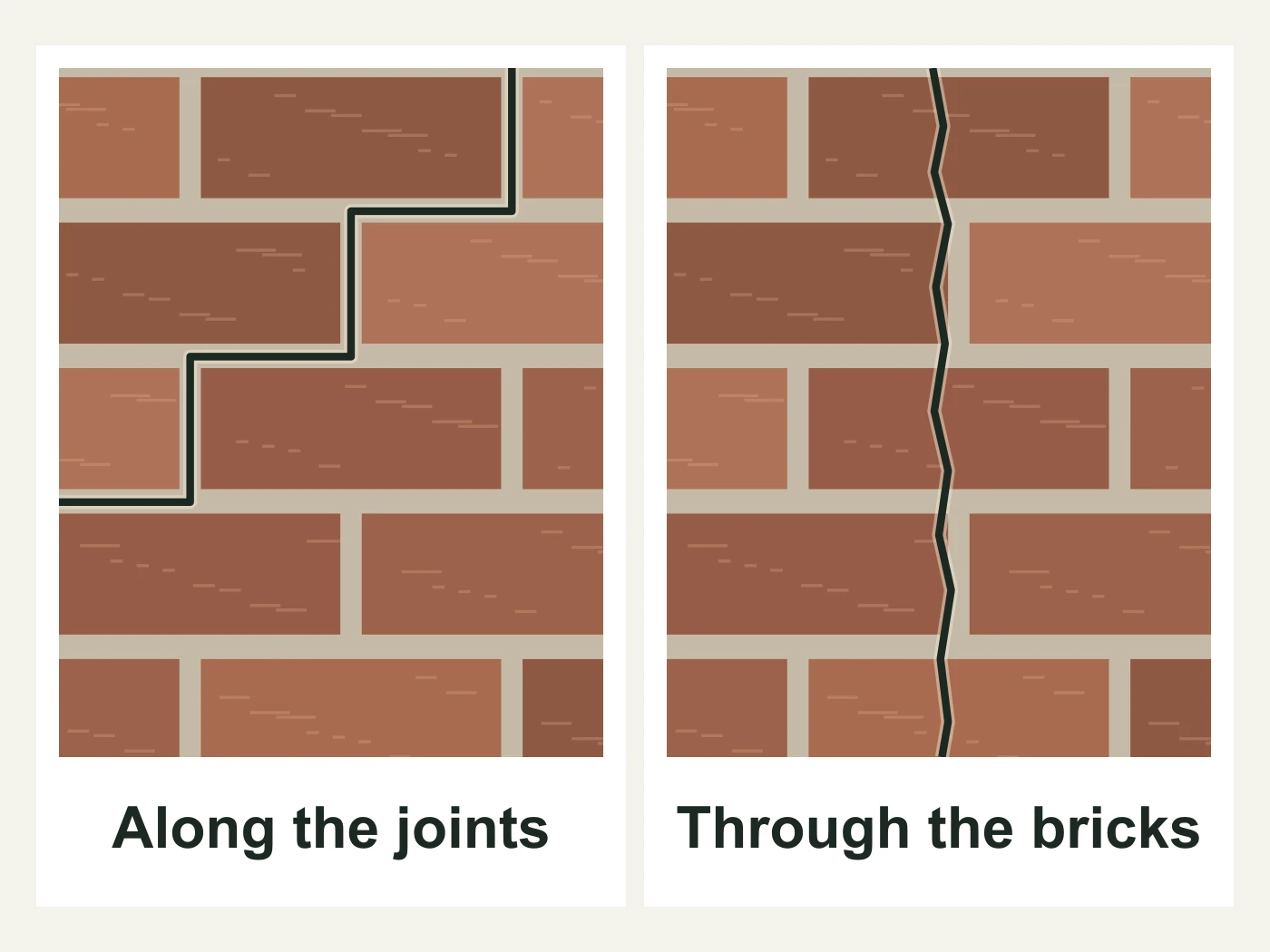
A crack following the mortar joints does not automatically mean stitching is appropriate. Equally, the visible width alone does not establish that a crack is harmless or serious. Our guide to cracks in brick walls covers what a crack’s path, width and growth can tell you.
What it cannot fix on its own
- A failed lintel
Reinforcing a crack does not replace the support over a window or door. Cracks around openings need the lintel and surrounding wall considered together.
- Continuing movement
A designed reinforcement system may accommodate normal movement, but it does not remove an unresolved cause of structural movement. The cause and the required repair need to be considered together.
- Badly deteriorated or displaced masonry
Some areas need brick replacement or rebuilding rather than reinforcement of the existing material.
- Weathered joints without a reinforcement need
Deteriorated mortar may need repointing. Stitching and joint renewal serve different purposes.
Underpinning addresses foundation support; crack stitching reinforces masonry. They are not interchangeable treatments. Whether foundation work or another specialist’s advice is needed depends on diagnosis. Astute does not offer underpinning through this service.
What happens to the visible finish?
The bars are concealed, but the surrounding mortar still needs making good. Joint colour, profile and any fine tuck lines affect how noticeable the repaired area will be. Our brick and mortar matching guide explains what to agree before work starts.
Can a rendered wall be stitched?
In a suitable repair, reinforcement goes into the masonry beneath the render, not simply into the surface coating. Access to the brickwork and reinstatement of the render therefore belong in the scope. A crack confined to render may need a different treatment from one through the wall beneath it.
Will the crack come back?
No responsible answer can promise that every crack will disappear permanently. The cause, movement, repair design and installation all matter. Covering a crack without understanding it can leave the original problem in place.
Ask whether any monitoring or follow-up is recommended and what changes should be reported. Keep the repair details and existing reports, rather than relying only on the appearance of the finished surface.
If the wall is loose, bulging or visibly moving, keep clear and seek prompt professional assessment. Do not open up the crack or remove bricks yourself.
What to ask before agreeing to a repair
- What is known about the cause, and what still needs investigation?
- Why is stitching suitable for this wall?
- Is any engineering advice or other repair required first?
- How will the mortar and adjoining finish be made good?
- What is included in the quote, including access and any follow-up?
When contacting us, include the location of the crack, when it appeared, whether it has changed and any earlier repairs or engineer’s report. Photos taken safely help start the conversation.
Our crack stitching service in Sydney starts with a free inspection. Where another approach suits the wall better, the work may involve brick repairs, repointing or repairs to an opening.
Sources and further reading
Helifix Australia: the crack-stitching principle and crack-stitching technical sheet (PDF). These explain a particular system, not a repair design or installer accreditation for Astute.
Sources checked 28 October 2026.